
Grant Parish Criminal Court Records
A Grant Parish criminal court record is the case-level file kept once a prosecution is filed in court. It can include a bill of information or indictment, minute entries, arraignment, pleas, motions, orders, sentencing, probation conditions, court costs, and final disposition. This is not the same record as a sheriff arrest report. The sheriff may document the arrest, booking, bond, or incident, but the Clerk of Court keeps the court case file after charges are filed.
Grant Parish is served by the Thirty-Fifth Judicial District Court. The official court site says the district comprises all of Grant Parish, has one judge, and operates from the Grant Parish Courthouse. Criminal cases at the district-court level can include felony matters and other criminal proceedings within the court's jurisdiction. The Clerk of Court, identified locally as Randall Briggs, is the central case-record office. Sheriff Steven McCain's office remains important for arrest reports, booking information, and bond channels, but those records are not the same as criminal court records.
The closer look at the arrest-to-charges path is handled through Grant Parish arrest records and court charges, while the broader record family sits with Grant Parish court records.
Search Grant Parish Criminal Court Records
The local online path begins with the clerk's criminal inquiry link through ClerkConnect. The official clerk quick-link source confirms a Grant Parish criminal inquiry URL, and the ClerkConnect shell describes subscription-based search and printing capability for Louisiana district-court clerks. The research did not find all active form fields in static public text, so users should search by the fields shown after the portal loads and contact the clerk when a file, copy, or older record is not available online.
The Grant Parish ClerkConnect criminal inquiry image source is the manifest's official criminal case portal source.
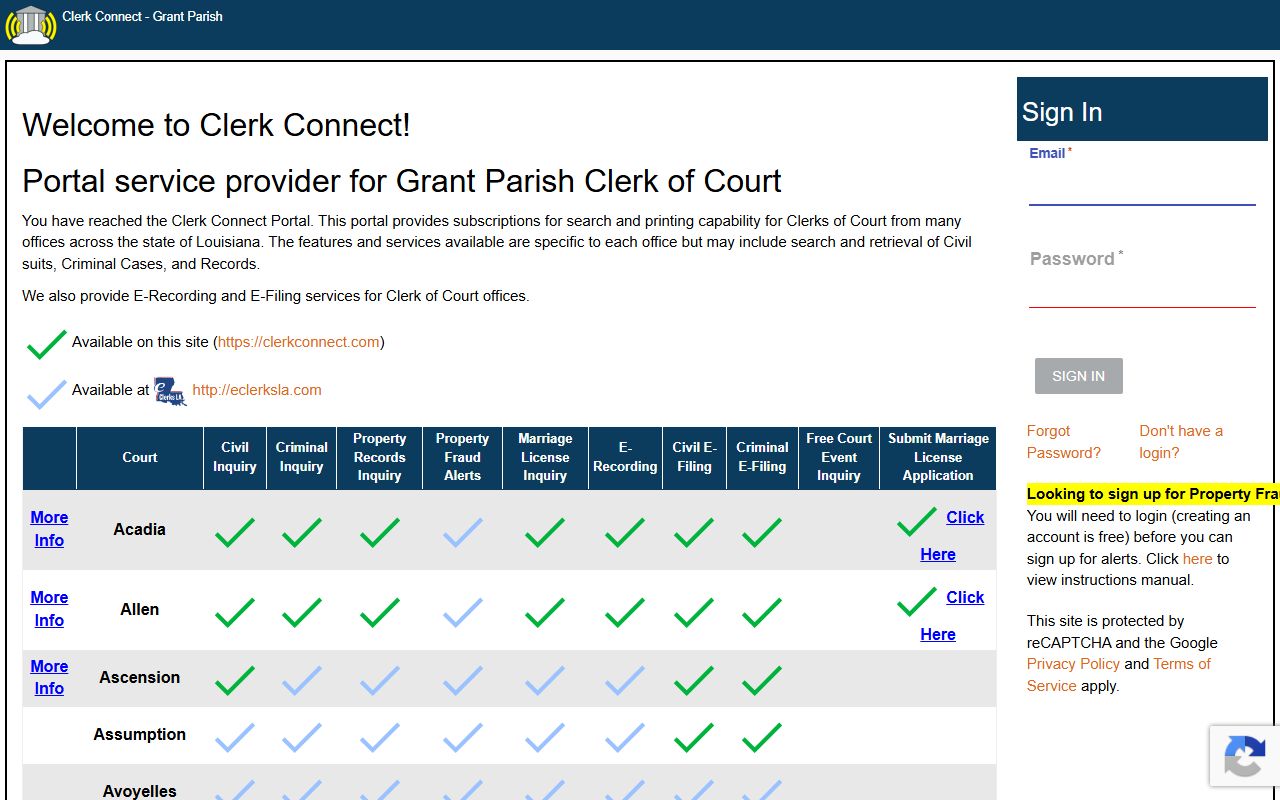
That source supports using ClerkConnect for criminal case lookup while reserving certified copies and file questions for the Clerk of Court.
- Start with the Grant Parish criminal inquiry path linked by the Clerk of Court.
- Search with the defendant name, case number, or other criteria shown by the portal.
- Review the case activity for filed charges, arraignment, motions, pleas, and disposition.
- Check whether the online view is only a docket summary or whether document images are available.
- Request certified copies, court minutes, or sealed-status answers from the Clerk of Court.
Grant Parish Criminal Case Flow
A criminal case file changes as the prosecution moves through court. The filed charge opens the court case or appears after the prosecutor chooses how to proceed. Arraignment records show the stage where charges are read and a plea is entered. Pretrial docket entries can show motions, orders, discovery disputes, continuances, and hearings. A plea or trial leads toward a disposition, and a conviction can lead to sentence, costs, probation, jail time, or other court-ordered terms.
Case flow: Charges Filed › Arraignment › Pretrial and Motions › Plea or Trial › Disposition › Sentencing
| Stage | What Happens |
|---|---|
| Charges filed | The prosecutor files formal charges, often through a bill of information or indictment. |
| Arraignment | The charge is presented in court and the defendant enters a plea. |
| Pretrial and motions | The docket may show motions, hearings, orders, continuances, and plea discussions. |
| Plea or trial | The case is resolved by plea, verdict, dismissal, acquittal, or other court action. |
| Sentencing | The record may show jail, probation, fines, costs, conditions, or other punishment. |
Grant Parish Criminal Court Fields
The research did not find a public sample Grant Parish criminal case screen, so exact field names should not be overstated. A typical criminal court file can show the case number, filing date, defendant, court, judge, filed charge, amendments, plea, disposition, sentence, probation terms, court costs, minutes, and copy activity. Investigative reports, witness statements, undercover information, juvenile offender identity, sexual-offense victim identity, technical security information, and confidential-source material are not ordinary public case-record fields.
| Field | What It Shows |
|---|---|
| Case number | The clerk's identifier for the criminal court case when available. |
| Defendant | The person charged in the criminal court case. |
| Filed charge | The offense alleged in the court filing, as filed or later amended. |
| Plea | The formal response, such as guilty, not guilty, or no contest if reflected. |
| Disposition | The outcome, such as conviction, dismissal, acquittal, or nolle prosequi. |
| Sentence | The punishment or conditions ordered after conviction. |
| Minute entry | The official record of what occurred at a specific court appearance. |
Grant Parish Charges and Convictions
A charge is an accusation filed in court. A conviction is an outcome after a guilty plea, verdict, or other qualifying adjudication. A Grant Parish criminal court record may show charges that were later reduced, amended, dismissed, or ended in acquittal. That is why filed charges should not be read as convictions unless the disposition confirms the final result.
| Point | Charge | Conviction |
|---|---|---|
| Meaning | An allegation placed before the court. | A final outcome based on plea or finding. |
| Timing | Appears early in the court case. | Appears after plea, verdict, or adjudication. |
| Record risk | Can change or be dismissed. | Can affect sentence, costs, probation, and history. |
Public Criminal Court Access
Louisiana public-record access starts with La. R.S. 44:1, but criminal records also involve exceptions. The La. R.S. 44:3 law-enforcement records restriction source assigned in the manifest explains why pending criminal, juvenile, victim, undercover, investigative, and security-sensitive records may be withheld.
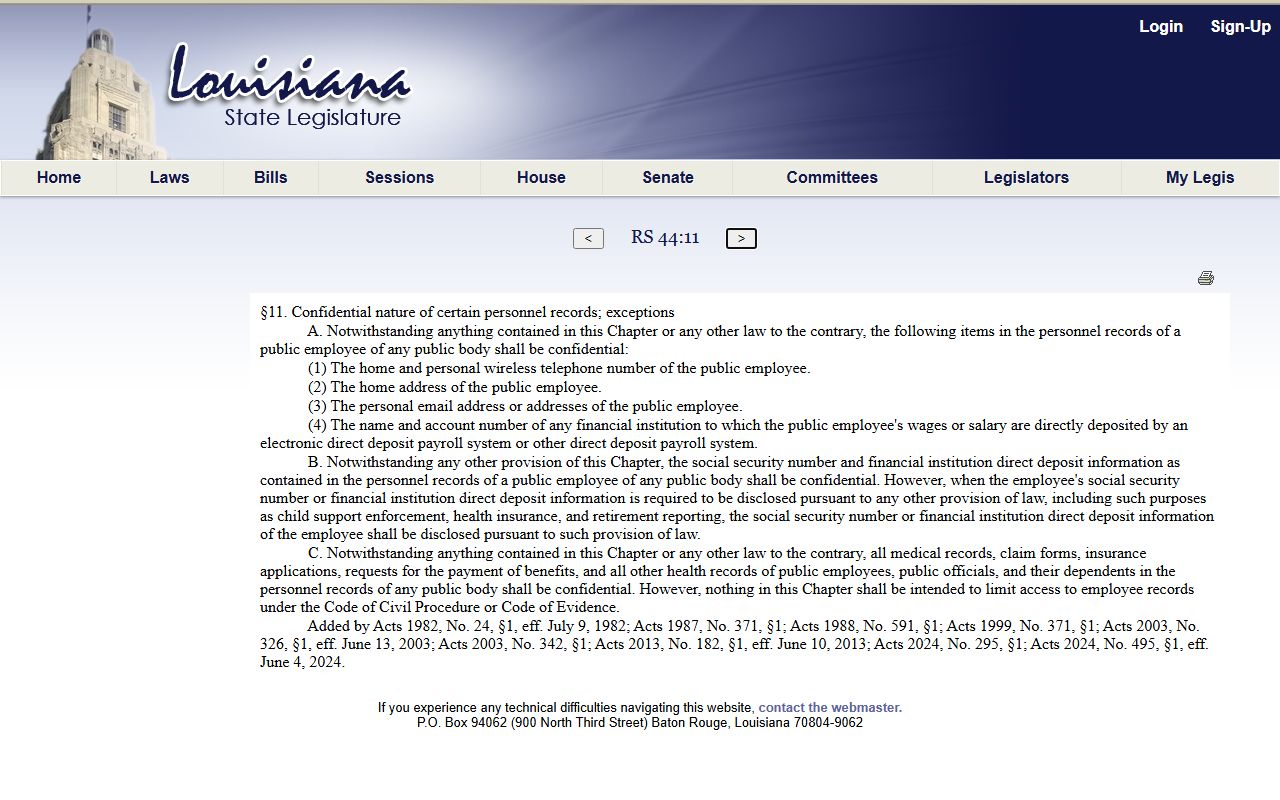
That restriction helps explain why the court file may be public while related sheriff investigative material remains privileged or redacted.
The sheriff's public-record page states that arrest reports can be released, but other arrest documents are privileged until adjudicated or final litigation is complete and supporting documentation is on file or produced. Criminal offense records are generally privileged until adjudicated. Even after adjudication, investigative reports, supplemental reports beyond property information, statements, confidential sources, juvenile-offender reports, and victim identity material may remain restricted absent court order.
Sealed Grant Parish Criminal Records
Sealing and expungement both limit public access, but they are not the same task. The local Grant Parish expungement PDF says applicants should verify cancellation of cash or property bond and any bond-forfeiture issue before filing. It requires a separate motion for each arrest date, identifies Louisiana expungement forms, and says to allow six months for completion. It also says status or address changes must be made in person by the applicant, while an attorney of record may receive status information in person.
| Point | Sealed | Expunged |
|---|---|---|
| Public view | Removed from ordinary public access by court restriction. | Limited through the Louisiana expungement process when eligible. |
| Grant Parish source | Court order or legal restriction controls access. | Local expungement instructions and Louisiana criminal procedure forms apply. |
| Common issue | Juvenile, sensitive, or court-restricted material. | Dismissal, acquittal, eligible misdemeanor, eligible felony, or interim expungement. |
The manifest assigns La. Code Crim. Proc. art. 971 as the criminal expungement procedure source.
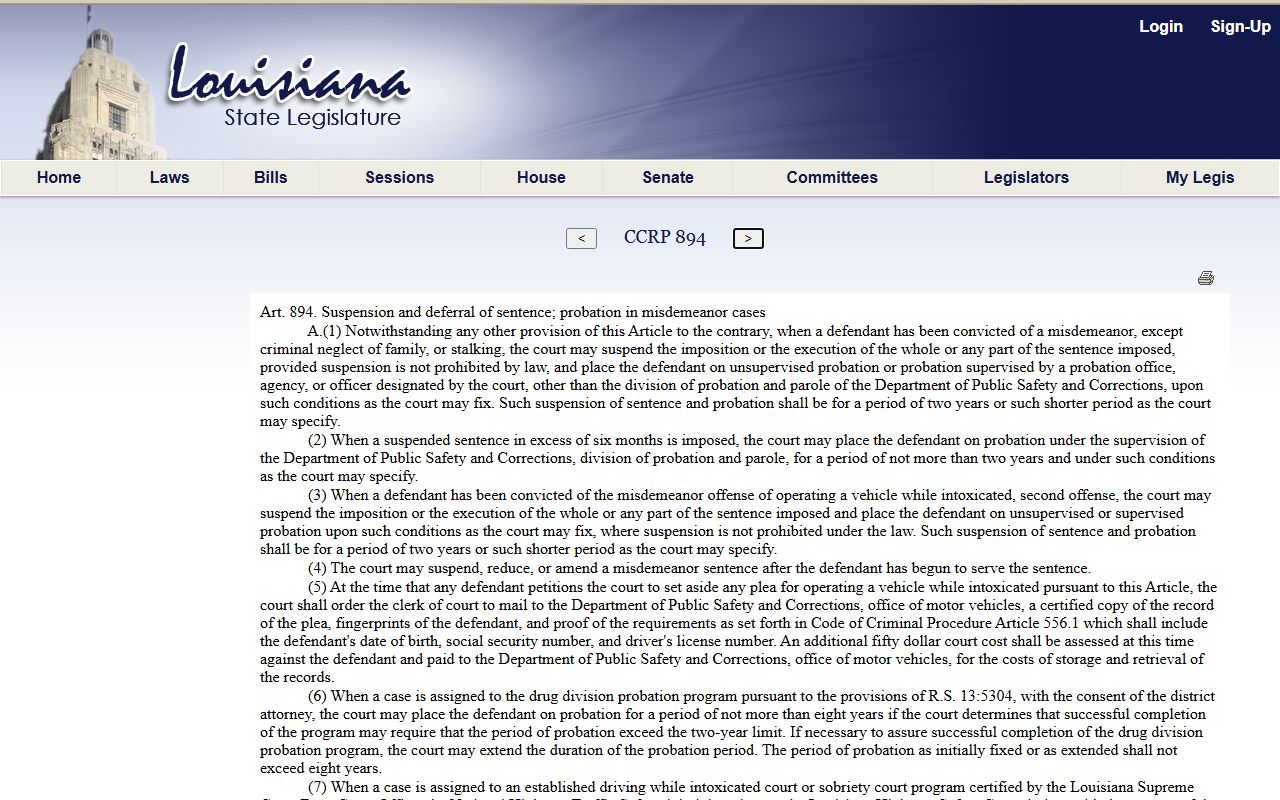
That statute source should be read with the local Grant Parish expungement PDF because local filing fees and instructions also apply.
Grant Parish Dispositions and Sentences
Disposition is the outcome of a charge or case. Common criminal outcomes can include guilty plea, conviction after trial, dismissal, nolle prosequi, not guilty, acquittal, or an amended charge. Sentence is separate. It can include jail, probation, fines, costs, conditions, or other court orders after conviction. The clerk fee schedule lists criminal copies at $1 per page, court minutes at $10 per date, and certification at $5 additional, so users who need proof should confirm current cost and copy status with the Clerk of Court.
Federal criminal matters are outside the parish system. The manifest assigns the U.S. Attorney's Office for the Western District of Louisiana as a criminal source for federal context.
That federal source is separate from Grant Parish criminal court records, which remain in the state district-court and clerk system.
Restricted Grant Parish Criminal Records
Restricted criminal records include more than sealed cases. The sheriff's rules identify juvenile criminal or status-offender reports as privileged, and juvenile suspect information cannot be released without a court order. Sexual-offense victim identity, undercover officer identity, investigative techniques, security procedures, training information, technical equipment details, and confidential sources may be withheld. Court records may also redact Social Security numbers, protected dates of birth, financial account numbers, minor identifiers, and other sensitive data.
Criminal background checks have a separate path. The sheriff's page says a person requesting a record check on themselves must submit a written request with name, date of birth, other identifiers, reason for inquiry, and proof of identity or photo ID. With that information, adjudicated criminal arrest files are released to the requester. That self-check process is not a substitute for a court-certified copy from the clerk.
Important: Do not treat a filed charge as a conviction unless the disposition confirms the final outcome.